
Professional Flat Roof Repairs by Ron Williams Certified Roof and Inspection

A flat roof rarely fails all at once. It usually gives warnings first: a soft spot underfoot, a water stain on a ceiling, a bubble in the membrane, ponding water that lingers after a storm, or a seam that starts to pull apart. The problem is that those early signs are easy to miss from the ground.
Flat roofs need a careful repair approach because water does not run off the same way it does on a steep-slope roof. Even a small defect can send moisture into insulation, decking, walls, and interior finishes. That is why inspection and repair should work together, not as separate services.
Professional Flat Roof Repairs by Ron Williams Certified Roof and Inspection brings the focus back to what matters most: finding the source of the problem, repairing it correctly, and helping prevent the same issue from returning.

Why flat roofs require a different repair mindset
Flat roofs are often called “flat,” but most are built with a slight slope. That slope directs water toward drains, scuppers, or gutters. When the slope is poor, drains clog, or the membrane ages, water begins to sit. Standing water adds weight, speeds wear, and makes small defects harder to control.
A repair that works on a shingle roof may not work on a flat roof. Flat roofing systems rely on continuous waterproof layers. That means seams, flashing, edges, vents, drains, and penetrations all matter. A gap around a pipe boot or a split at a seam can create just as much trouble as a large torn section.
Common flat roof systems include:
TPO
A single-ply membrane often used on commercial and residential flat roofs.
EPDM
A synthetic rubber membrane known for flexibility and weather resistance.
Modified bitumen
A layered asphalt-based system often installed in rolls.
Built-up roofing
A multi-layer system made with asphalt and reinforcing materials.
Coated roof systems
Existing flat roofs protected with liquid-applied coatings when the roof is suitable.
Each system has its own repair method. Using the wrong patch, adhesive, coating, or sealant can lead to failure. A roof may look patched for a short time, while moisture continues to move underneath.
That is why a strong repair process starts with identification. The roofing material, age, drainage pattern, and condition of the substrate all shape the right solution.
The inspection comes before the repair
A flat roof leak does not always appear directly below the damaged area. Water can travel through insulation, along decking, around framing, or behind wall materials before it shows up indoors. This makes guessing risky.
A proper inspection looks at both the obvious and hidden clues. On the roof, that includes seams, flashing, drains, curbs, penetrations, coatings, membrane laps, edge metal, and areas where water collects. Inside, stains, peeling paint, damp insulation, musty smells, and ceiling discoloration can help trace the path of moisture.
The goal is not to patch the first visible crack. The goal is to understand the cause.
Roof symptom | What it may suggest | Why it matters |
Ponding water after dry weather | Drainage or slope issue | Water can shorten roof life |
Blisters or bubbles | Trapped moisture or poor adhesion | Cutting into them without care can worsen damage |
Open seams | Aging adhesive or movement | Water can enter under the membrane |
Cracked flashing | Movement, UV exposure, or old sealant | Edges and corners are common leak points |
Soft areas underfoot | Wet insulation or deck concerns | Repairs may need more than surface patching |
A thorough inspection also helps separate urgent problems from maintenance items. An active leak near electrical fixtures needs fast attention. A small split at a remote flashing may still need repair, but it may not carry the same immediate risk.
That distinction helps owners make better choices. It also prevents money from going toward cosmetic fixes while the real leak source remains untouched.
What professional flat roof repair can include
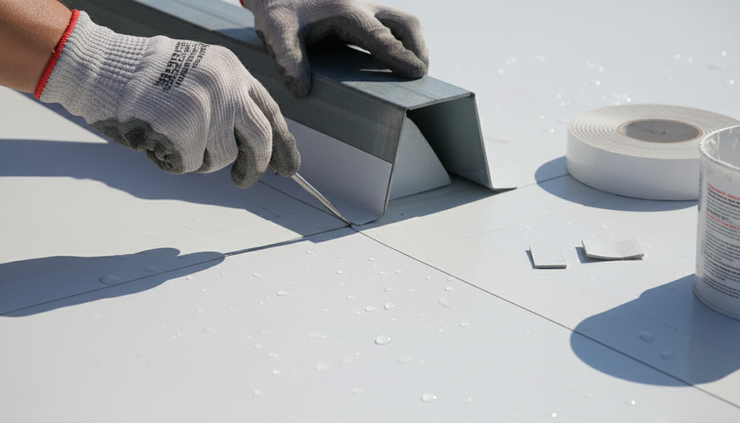
Flat roof repair is not one single service. The right work depends on the roof system and the source of damage. Some repairs are small and localized. Others need a larger section opened, dried, rebuilt, and sealed.
Membrane patching and seam repair
Membrane damage can come from foot traffic, dropped tools, storm debris, UV wear, or age. A professional repair usually includes cleaning the area, preparing the surface, applying compatible repair material, and sealing edges according to the roof type.
For seam issues, the repair may involve re-adhering, heat welding, taping, or applying manufacturer-compatible materials. A seam repair should bond to sound roofing, not dirt, chalking, loose coating, or wet material.
Flashing repair around edges and penetrations
Many flat roof leaks begin at transitions. These include walls, parapets, HVAC curbs, skylights, vents, plumbing stacks, and roof hatches. These areas move more than the main roof field, and they often have corners or vertical surfaces that are harder to seal.
Good flashing repair is detailed work. The surface must be cleaned and prepared. Loose material must be removed. The repair must tie into the existing system in a way that sheds water, resists movement, and does not trap moisture.
Drain and scupper work
Water needs a clear path off the roof. If drains are clogged or scuppers are blocked, the best membrane repair can still fail sooner than expected. Leaves, roofing granules, debris, and windblown trash can all create drainage trouble.
Repair may include clearing drains, sealing drain bowls, fixing the membrane around drain openings, or addressing low spots when practical. In some cases, drainage design may need further evaluation.
Coating repairs and restoration work
Roof coatings can protect certain flat roofs, but they are not a cure for every problem. Coating over wet insulation, damaged seams, or failing flashing only hides the issue. The roof must be evaluated first.
If the roof is a good candidate, repair work may include cleaning, patching seams, reinforcing vulnerable areas, and applying a compatible coating. The preparation matters as much as the coating itself.
Wet insulation and deck repairs
When water gets below the membrane, the repair may need to go deeper. Wet insulation loses performance and can hold moisture against the deck. In some situations, damaged material must be removed and replaced before the membrane is restored.
This is where inspection experience matters. A surface patch over saturated materials can trap water inside the roof assembly. That can lead to recurring leaks, odor, mold concerns, or structural damage over time.
When a repair makes sense and when replacement needs to be discussed
Not every flat roof problem calls for replacement. Many roofs can be repaired effectively when the damage is isolated, the membrane is still flexible, and the underlying structure is dry and sound.
Repair often makes sense when:
The damage is limited to one area
The roof is not near the end of its useful life
Seams and flashing are mostly intact
Drainage problems can be corrected
Moisture has not spread widely below the surface
Replacement may need to be part of the conversation when:
Leaks appear in several unrelated areas
The roof has widespread cracking or brittleness
Large sections of insulation are wet
Repairs have failed repeatedly
The roof surface has lost adhesion or strength
Drainage problems are built into the roof design
The honest answer is not always the cheapest short-term answer. A small repair can be a smart choice if it solves the source of the leak. Repeated patching can become expensive when a roof is already past the point of reliable service.
A professional inspection helps make that decision clearer. It gives the owner a practical view of what is happening now, what can be repaired, and what risks remain.

The value of Certified Roof & Inspection experience
Flat roof repairs require judgment. The visible damage is only part of the story. The better question is why the damage happened and whether the surrounding roof can support a lasting repair.
Ron Williams Certified Roof and Inspection reflects a repair approach built around evaluation, not guesswork. That matters because a flat roof is a system. Membrane, insulation, deck, flashing, drainage, and edge details all work together.
A careful repair process may include:
Listening to the leak history
When the leak appears can reveal a lot. Wind-driven rain, long storms, snowmelt, or HVAC condensation can point to different sources.
Checking roof access and safety conditions
Safe access matters for both inspection accuracy and the repair work itself.
Identifying the roof material
Repair materials must match the system. Compatibility affects adhesion, flexibility, and durability.
Inspecting vulnerable details
Drains, seams, penetrations, walls, and edges often need the closest look.
Looking for signs of trapped moisture
Soft areas, staining, odors, or repeated leaks can suggest deeper problems.
Making the repair fit the roof
A good repair is not just sealed today. It should account for movement, drainage, weather exposure, and future maintenance.
This process helps avoid the most common flat roof repair mistake: treating every leak like a simple hole. Some leaks are simple. Many are not.
What property owners can do before scheduling repair
A leaking flat roof needs attention, but a few simple steps can make the repair visit more productive.
Start by documenting what is happening. Photos of interior stains, dripping areas, and roof conditions after rain can help establish patterns. If water appears only during wind-driven storms or after long rain events, that detail matters.
If it is safe to do so from inside the property, move belongings away from the leak area and protect finishes. Avoid climbing onto a wet or damaged roof. Flat roofs can be slippery, and soft areas may not support weight as expected.
Do not rely on hardware-store caulk as a long-term fix. Temporary sealants may slow water for a short time, but they can also contaminate the surface and make a proper repair harder later. Some products do not bond well to common flat roof materials.
Before the repair appointment, gather basic details:
Approximate age of the roof
Known roof system, if available
Past repair records
Location of interior staining
Photos taken during or after rain
Any recent storm, HVAC, plumbing, or construction activity
Small details can save time. For example, a leak near a rooftop HVAC unit may relate to flashing, condensation lines, panels, or the roof membrane nearby. Knowing when equipment was serviced can help narrow the search.
How maintenance helps repairs last longer
Even well-repaired flat roofs need routine care. Maintenance does not make a roof permanent, but it can reduce avoidable damage and catch problems early.
The most useful maintenance habits are simple:
Keep drains, gutters, and scuppers clear
Remove branches, leaves, and debris
Check after major storms
Limit unnecessary foot traffic
Protect the roof during HVAC or utility work
Watch for new stains indoors
Schedule periodic roof inspections
Foot traffic deserves special attention. Flat roofs often hold mechanical equipment, which means technicians may walk across the surface. Dropped tools, sharp panels, and repeated traffic can damage membranes. Walk pads may help in high-traffic areas, depending on the roof system.
Trees can also create problems. Overhanging branches drop leaves, scrape surfaces, and contribute to clogged drainage. Trimming branches away from the roof can reduce wear and make inspection easier.

What a good finished repair should look like
A finished flat roof repair should look clean, secure, and intentional. The repaired area should be bonded to a properly prepared surface. Edges should be sealed. Flashing should lie tight without gaps or fishmouths. Drains should be clear. Loose debris should be removed.
The repair should also make sense in context. If the roof has ponding water, the repair must account for that exposure. If the roof membrane is aging, the repaired area should not create a rigid spot that fails as the surrounding roof moves. If the leak came from a wall or curb, the repair should address the vertical and corner details, not only the horizontal surface.
A good repair does three things:
Stops the current water entry
Protects the vulnerable detail
Reduces the chance of repeat failure
That is the difference between a patch and a professional repair.
Flat roofs reward careful work. They also expose shortcuts quickly. A repair that ignores inspection, drainage, material compatibility, or trapped moisture may fail during the next serious storm.
The best next step is simple: treat the roof as a system. Look for the cause, choose the right repair method, and keep the roof maintained after the work is complete. With the right inspection and repair approach, a flat roof can continue protecting the building instead of becoming a recurring source of stress.


Comments